
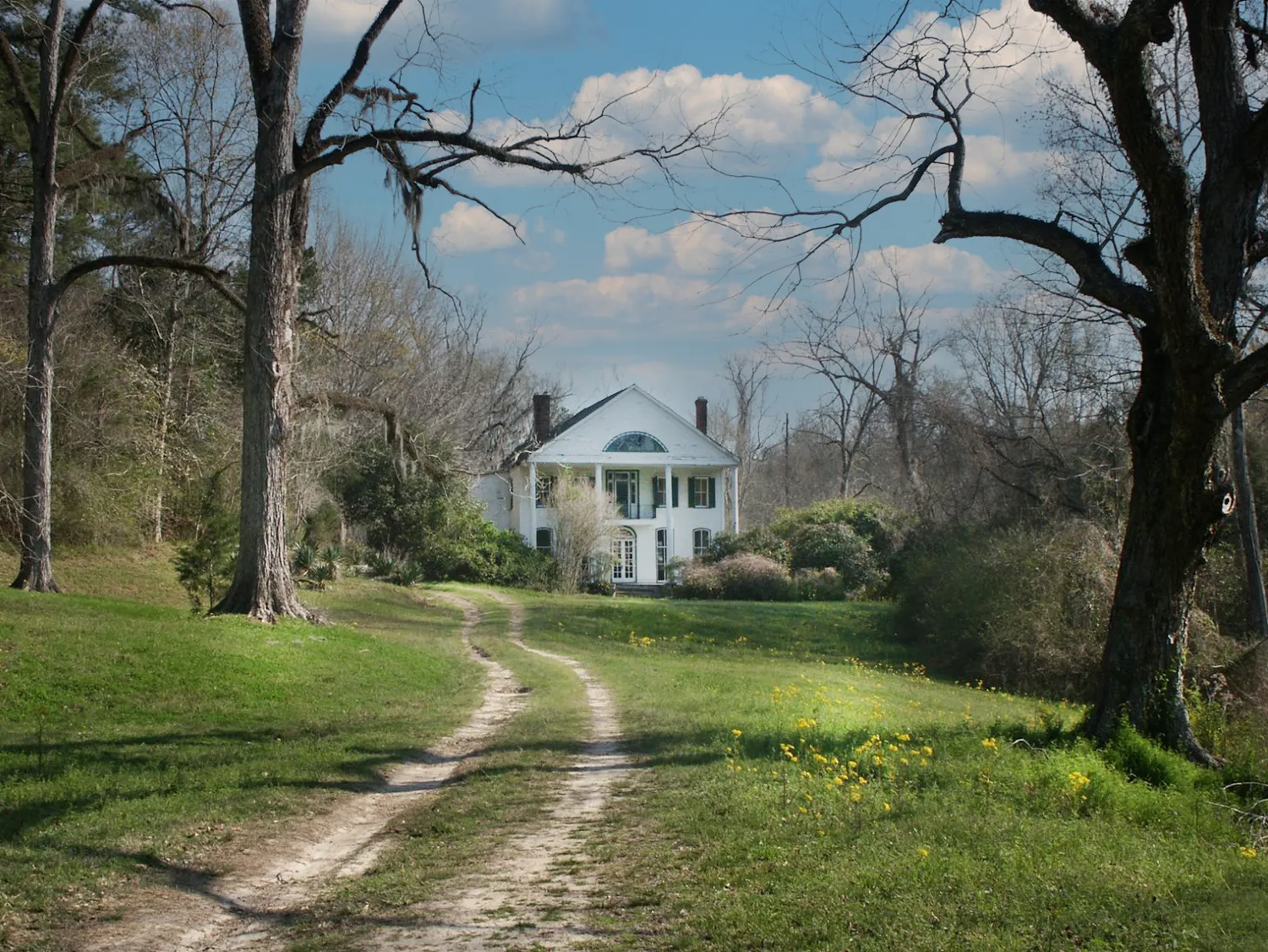
From river to rail to sanctuary
A riverboat port, then a railroad town, then abandoned. What has been restored here is not a house but a whole settlement.
An 1860 census analysis notes that Como's proximity to the Mississippi River made it a natural location for commercial transportation. Paddle wheelers navigating the Mississippi stopped for wood for fuel and delivered mail.
Inhabitants of the Tunica Hills brought crops and livestock to be shipped to markets downriver, and purchased goods from traders that they could not make themselves — sewing needles, salt. Over time Como became a gathering place and a hub for local commerce, and a tiny village known as Brandon was formed.
Brandon remained a trade center when steamboat transportation was supplanted by rail, with a railroad running just behind the home. The beautiful home owned by the Brandon family was likely the centerpiece of the village, which in the 1800s contained a post office and cotton and sawmills. W. L. Brandon left the home to his youngest son, Lane, who rebuilt it in 1890.
As the Agrarian Age ended and gave way to the Industrial Revolution, and trucking replaced rail for the delivery of goods, the little village of Brandon faded from existence.
The village had a schoolhouse, a commissary, a church, a post office and a railroad station, and twenty-two houses stood here at one time.
That is the part people tend to find remarkable. Plenty of old homes have been restored and plenty of barns converted — but an entire abandoned settlement, rebuilt building by building, is a more rare thing. Como is not a plantation house with grounds attached; it is a small river-and-rail town that came back.
Now Como is again a place of gathering — but for a different reason.
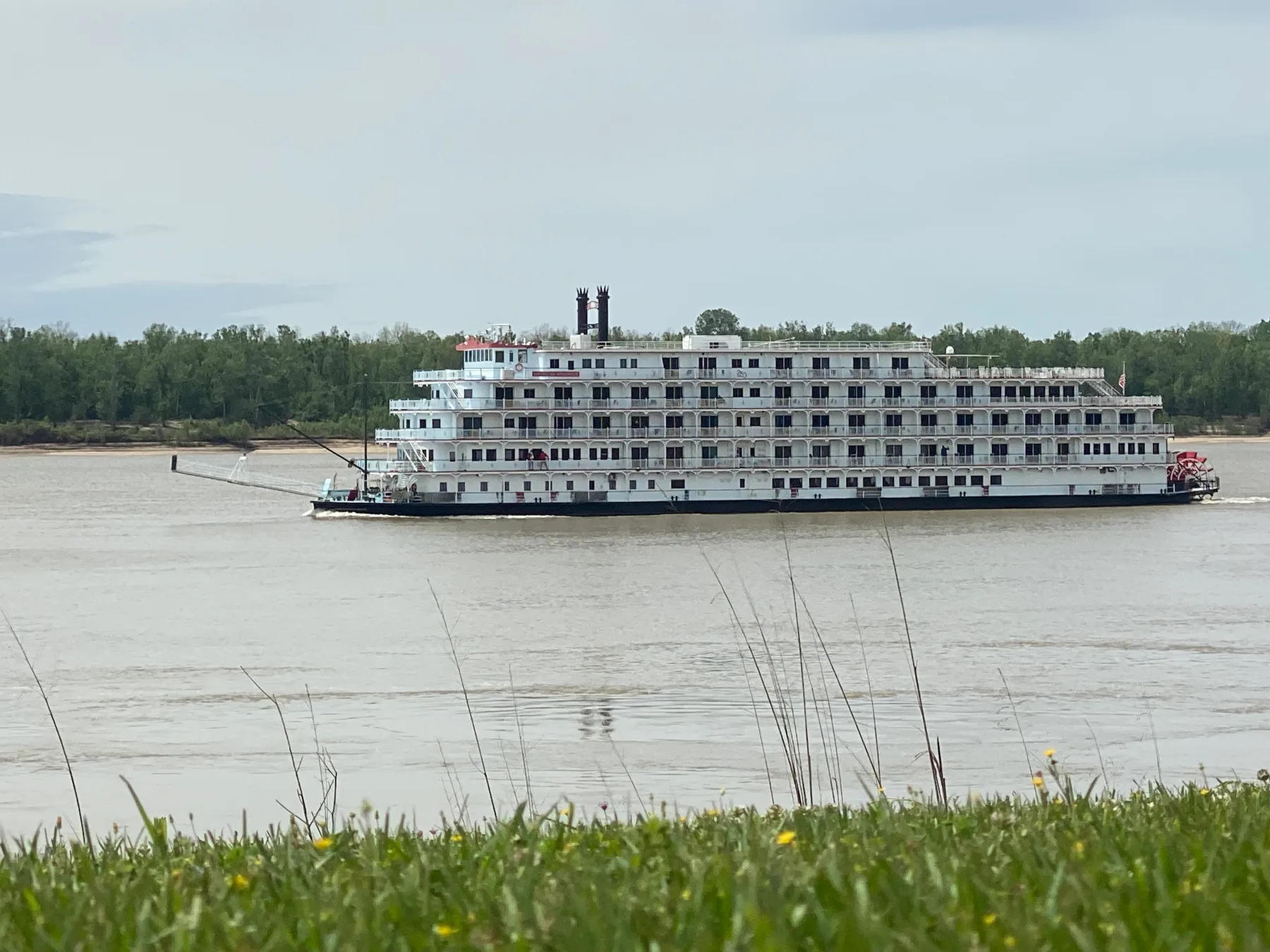
The traffic never stopped
The paddle wheelers that once tied up at Como Landing are gone, but the river still carries everything past the bluff — barges, towboats, and the occasional passenger boat working its way upstream.
It is the same view the village of Brandon was built around, and the reason guests find themselves drawn to the river.
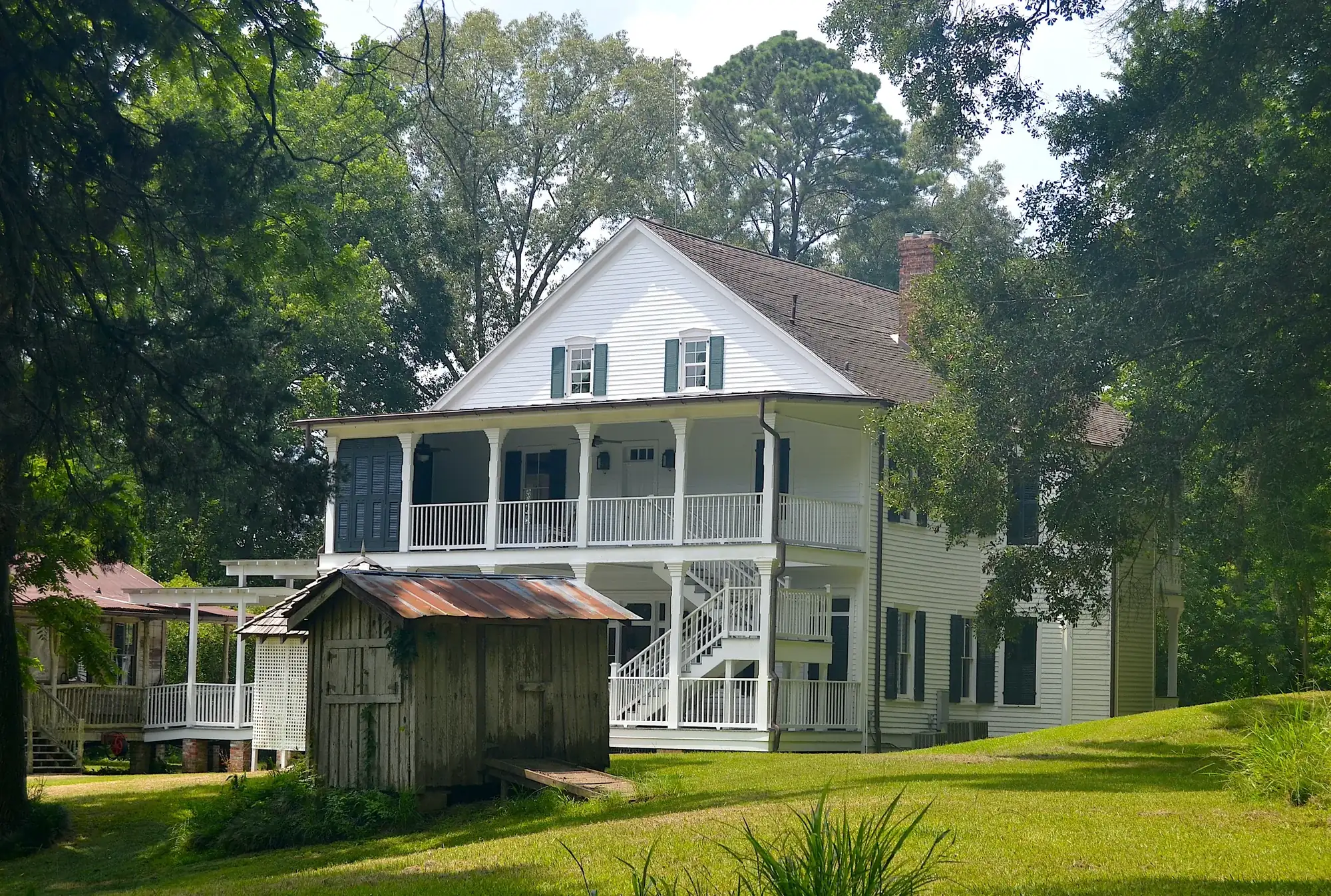
The history of Como, told aloud
A short recording of Como's history, from the landing and the village of Brandon to the retreat center it is today.
More to hear? Listen to Como's other recordings, including a radio interview with our spiritual director.
Room for more to come
Como Retreat will gradually expand to offer accommodations for 100 guest cabins. A writer's cabin is also in the works.
Support the Expansion